 by admin
Simple Tips to Prevent Sound Echoes in Large Tiled Living Areas
June 19, 2026Modern architecture puts an enormous focus on creating spacious, bright spaces that feature clear lines and premium materials. A lot of homeowners decide to install stunning large-format flooring tiles made of porcelain or ceramic across their main living spaces. They are extremely sturdy, beautiful and extremely easy to maintain and maintain, which makes them an excellent option especially for families with busy schedules. But, after furniture is set up there is an enormous and incredibly frustrating issue: the room sounds like an echoey, empty cave.
If you attempt to engage in an ordinary conversation with a friend or watch a film on your TV or listen to music that is soft, especially when customizing home theater setups, the sound bounces off across the surfaces making a loud chaotic jumble of sound. The harsh echo can lead to extreme ear fatigue that makes it difficult to comprehend speech and can ruin the peace and tranquility in your home. It is good news that you don’t have to tear up the beautiful tile floors to address the issue. If you follow a few simple and highly effective interior design techniques, especially when customizing home theater environments, you can reduce the sound and bring tranquility and calm back into your living space.
Why Tile Floors Create Such Intense Sound Echoes
To address the issue of echoing in your living space you must first comprehend the basic physics of the way sound behaves when it comes into contact with various household materials. Sound waves travel through air, much like ripples that occur on the surface of a water pond. When a sound waves leaves your mouth or your TV speaker, it moves forward until it hits the surface. If the surface is porous and soft–like an extremely thick mattress, a velvety sofa, or even a deep carpet, the sound waves sink into the fabric and are caught, and turn into tiny quantities that are a source of energy. This process is known as sound absorption.
Concrete floors, tile floors, big glass windows and ceilings made of painted plasterboard are exactly the opposite of soft substances. They are extremely dense, perfectly flat and totally non-porous. When a sound wave strikes the floor with a tiled surface and is unable to get through the tile at all. The sound wave bounces off the tile with the same speed similar to an inflatable ball bounces off the concrete wall. In a room that is crowded by hard materials, one sound wave could bounce back and back and forth between the floors, the walls and the ceiling for a number or more instances per second. This bouncing action produces what audio experts call Reverberation. It can be described as the scientific term used to describe the annoying echo that can ruin the acoustics of your room.
Layer Large Plush Area Rugs and Thick Comfort Mats
The most efficient and effective method of removing echoing sound waves from tiles is to strategically place big, luxurious rug areas into your primary seating areas. It is not necessary to cover every inch of your stunning tile. You just need to focus on the zones where sound waves are more likely to hit the floor first, like the area between your sofa and your TV screen.
When you’re looking to buy an area rug to solve an echo issue, the size and density of the rug are much greater than design. Avoid flat, thin cotton rugs as they lack the physical mass to withstand the rigors of deep sounds. Instead, opt for thick wool rugs of superior quality deep shag carpets or tufted plush options. To boost the sound-absorbing capacity of the rug it is essential to install the thick, high-density rug pad or rubber right underneath it. The rug pad functions as an acoustic spongy hidden in the floor that encases the sound waves that travel through the carpet’s upper layer, preventing them from ever touching the tile beneath.
Upgrade Your Window Treatments to Heavy Sound Absorbent Fabrics
A lot of modern living spaces with tile floors also feature huge, stunning floor-to-ceiling glass windows, or sliding doors for patios. Glass lets in stunning natural light, it’s equally hard and reflective as the flooring tiles. When sound bounces off of your tile flooring, it typically bounces straight towards your glass windows, before bouncing back out into the room, making the echo issue twice as severe.
Strategically Place Large Soft Furniture Pieces and Greenery
The furniture you select and the arrangement you make in your spacious living space can play an important role in limiting the echo of sound. Simple furniture made of solid wood, shiny leather or metal frames that are exposed have no acoustic benefit and sound waves bounce off them, just as they bounce off tiles.
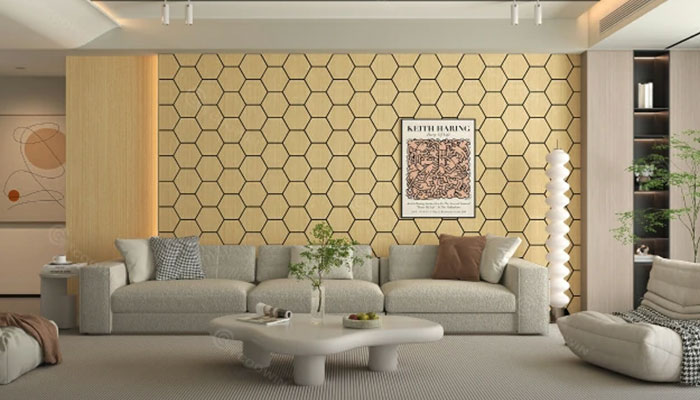
To make the room sound more comfortable choose large sofas that are fully upholstered and large armchairs. A huge sectional sofa that is filled with soft feathers from down and wrapped in fine fabric or soft microfiber works as a huge acoustic panel placed in the middle of your living space. In addition, fill your sofa with lots of large decorative throw pillows and thick fabric blankets.
It is also possible to introduce large, lush indoor plants like a tall Fiddle Leaf Fig Tree, or an imposing peace lily into the space’s empty corners. The intricate, irregular forms of the leaves of plants are excellent at breaking up huge audio waves, and then scattering them to various directions, which prevents the echo path from running for a long time across the tiled area.
Conclusion
Living in a stunning modern and contemporary house with clean, polished tile floors shouldn’t mean that you have to live in a harsh and noisy space that can feel like a public pool. The sound echoes are caused by sound waves that bounce off unchecked hard, flat surfaces. One common mistake to avoid is ignoring basic acoustic treatment in such environments. By strategically placing thick wool area rugs using high-density felt pads, hanging thick velvet curtains over large glass windows, and adorning your space with soft furniture made of fabric and natural plants, you can instantly alter the acoustics in your room. Simple changes to your decor result in a tranquil, peaceful, comfortable living space where family members can gather, unwind, and listen to high-quality audio without any annoying noise distortion.