 by admin
Essential Checklist for Building a Custom Home Cinema in Pakistan
August 02, 2026Are you planning on transforming an unfinished space into a stunning home theatre experience? The design of a theater that is dedicated to entertainment requires careful planning in order to receive crystal-clear sound, clear images, and the best possible enjoyment without making costly errors. A custom home cinema can bring the excitement of a silver screen inside your living space and gives you complete control on lighting as well as the quality of sound and seating. The construction of a home cinema in Pakistan requires specific considerations in regards to size as well as acoustic insulation and the management of power and temperature control. In this post, we’re going to review the most important elements required for a customized home theater, offer an entire checklist of room design as well as audio-visual tips and show you how to care for your equipment to ensure its long-term durability.
Selecting and Preparing the Ideal Room Space
The space you select is the base of your cinema experience. Dimensions of the space and physical layout greatly affect the balance of light and acoustic sound.
A rectangular space is typically the most suitable configuration for home cinemas as it keeps sound waves from traveling in a random manner, as is the case in square-shaped rooms.
Room Selection Criteria
- Avoid square Rooms Rectangular layouts are a great way to spread sound evenly across rows of seating, without creating unneeded bass buildup.
- Reduce Windows Pick the basement or an interior room with only a few windows to control the lighting conditions. natural light.
- Check Ceiling Height: Ceilings should be 9 to 10 feet tall to accommodate high-tiered seating platforms as well as ceiling-mounted sound systems.
Soundproofing and Acoustic Room Treatment
Acoustic treatment that is properly done ensures that the movie’s loud sound stays in the theater and prevents outside background noise from disrupting your movie.
Concrete or brick walls can reflect sound waves, causing harsh echoes and muddy audio clarity. Professional Smart home automation, along with soundproofing panels, carpeting, and specially designed acoustic wall padding, can help reduce excess echo and provide clearer dialogue.
Essential Acoustic Upgrades
- Acoustic Wall Panels Put fabric-wrapped acoustic panels near the primary sound reflection points on sides of walls.
- The heavy carpeting is laid thick carpeting with thick padding to block out reflections of sound off tiled floors.
- Solid Core Doors Replace hollow doors with solid-core doors made of heavy wood that come with rubber seals on the perimeter to stop the leaks of noise.
Display Technology and Screen Selection
Selecting the best setup for your screen will depend on your room’s length, viewing distance, and budget. When choosing home cinema displays, you can opt for an enormous four-channel Smart Television or an HD projection system paired with a fixed-frame display.
Projectors provide a realistic cinema-like experience and screen sizes that range between 100 and 150″ or greater. Modern 4K laser projectors offer the highest brightness and dark black levels that work extremely well in dim, light-controlled spaces.
Ambient Lighting Rejection screens ensure sharp color contrast, even when only a little ambient light gets into the room.
If your space is smaller than 12 feet and width, a premium 85-inch or 98-inch OLED TV could provide sharper contrast and more convenient installation without the need for a throw or projector distance.
Audio System Layout and Speaker Placement
Audio is a significant part of the cinema experience. A high-quality surround sound system will put you in the center of the action and provide realistic audio effects that are directional in nature.
A traditional 5.1 as well as 7.1 surround system consists of front left center, right and surround speakers, as well as subwoofers that are specifically designed to deliver deep bass.
For the ultimate contemporary cinema experience consider upgrading to an object-based system such as Dolby Atmos with 5.1.2 or 7.1.4 layout. 5.1.2 or 7.1.4 layout. Dolby Atmos also includes overhead ceiling speakers which allow sound effects like flying helicopters, or rain–to be able to move in three dimensions over and around the seating area.
Set your primary center-channel speaker just either above or below the screen to ear-level since it is responsible for 70% of all movie dialogue.
Power Management and Electrical Backup Solutions
Incessant power fluctuations as well as unexpected electrical load shedding are real issues that need to be considered in the planning phase.
The most expensive audio-visual equipment including laser lamps, audio-visual equipment, and AV receivers are susceptible to sudden power spikes as well as sudden voltage drops. Having your entire theater set-up via a high-quality Internet Uninterruptible Supply (UPS) or a dedicated solar inverter set-up protects your investment and avoids abrupt shutdowns during film sessions.
Surge protectors and power conditioners must be connected to the main circuit breaker for your theater to block out electrical noise while delivering the correct power to the audio processors and audio amplifiers.
Custom Theater Seating and Tiered Layouts
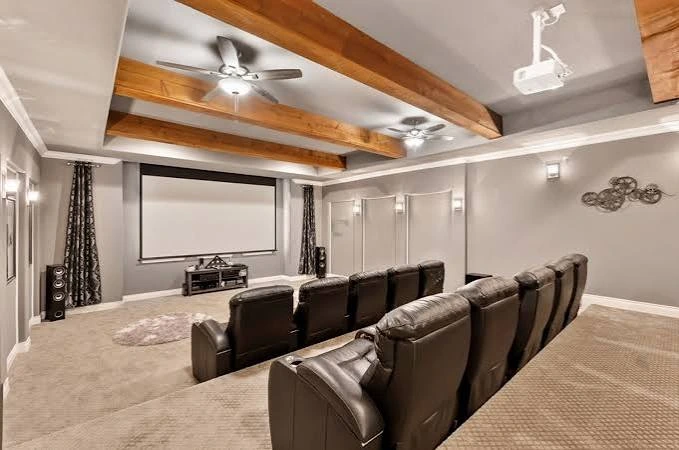
The comfort of your seat will determine how long you are able to watch movies without fatigue. Custom-designed home theater recliners come with soft seats, leather-covered upholstery built-in cup holders and USB charge ports.
If you intend to put in several rows of seating make a riser made of wood to support the rear row. By elevating the second row 8-12 inches guarantees that those in the back row have an unobstructed view over the seats in front without obstructions to the head.
Make sure you have at least 4 or five feet of free space between the seats in the front row and screen to reduce eye strain.
Climate Control and Smart Lighting Integration
Properly ventilated and lit up lighting sets the mood and ensures peace and comfort in an enclosed theater space.
A room that is enclosed with various electronic devices as well as human heat can generate warmth rapidly. Install a quiet inverter split conditioner away from the main microphones or seating areas to minimize noise from wind.
Smart lighting systems permit users to control the lighting in their rooms via a smartphone application or a remote control. Create custom lighting settings, such as movie Mode, Intermission, or Cleaning Mode, which automatically dims the floor and wall sconce lighting when you press play.
Care and Equipment Maintenance Guidelines
Regular maintenance helps keep your theater equipment operating efficiently and prolongs the life of components in time.
Dust accumulation on projector lenses, receiver vents, and speaker grilles can lead to excessive heat and reduce performance. Clean your projector air filters every 3 to 6 months, and ensure the main AV equipment rack is placed in a ventilated area. A reliable control system can also help manage and monitor your AV equipment efficiently.
Cleanse theater seats in leather using special leather conditioners that prevent cracks due to dryness in the air. Avoid harsh chemical sprays on TV or projection screen displays. Use dry microfiber cloths that are specially made to protect optical glass.
Conclusion
The creation of a customized home cinema requires you to balance technical audio-visual capabilities with an inviting interior design and a reliable power infrastructure. When you choose a rectangular space, taking care of wall acoustics and installing surround sound and an electrically safe backup, you can create an incredible entertainment space. This essential checklist for planning will ensure that your home theater is able to deliver breathtaking cinematic experiences, crystal-clear sound, and complete peace for the years to come.