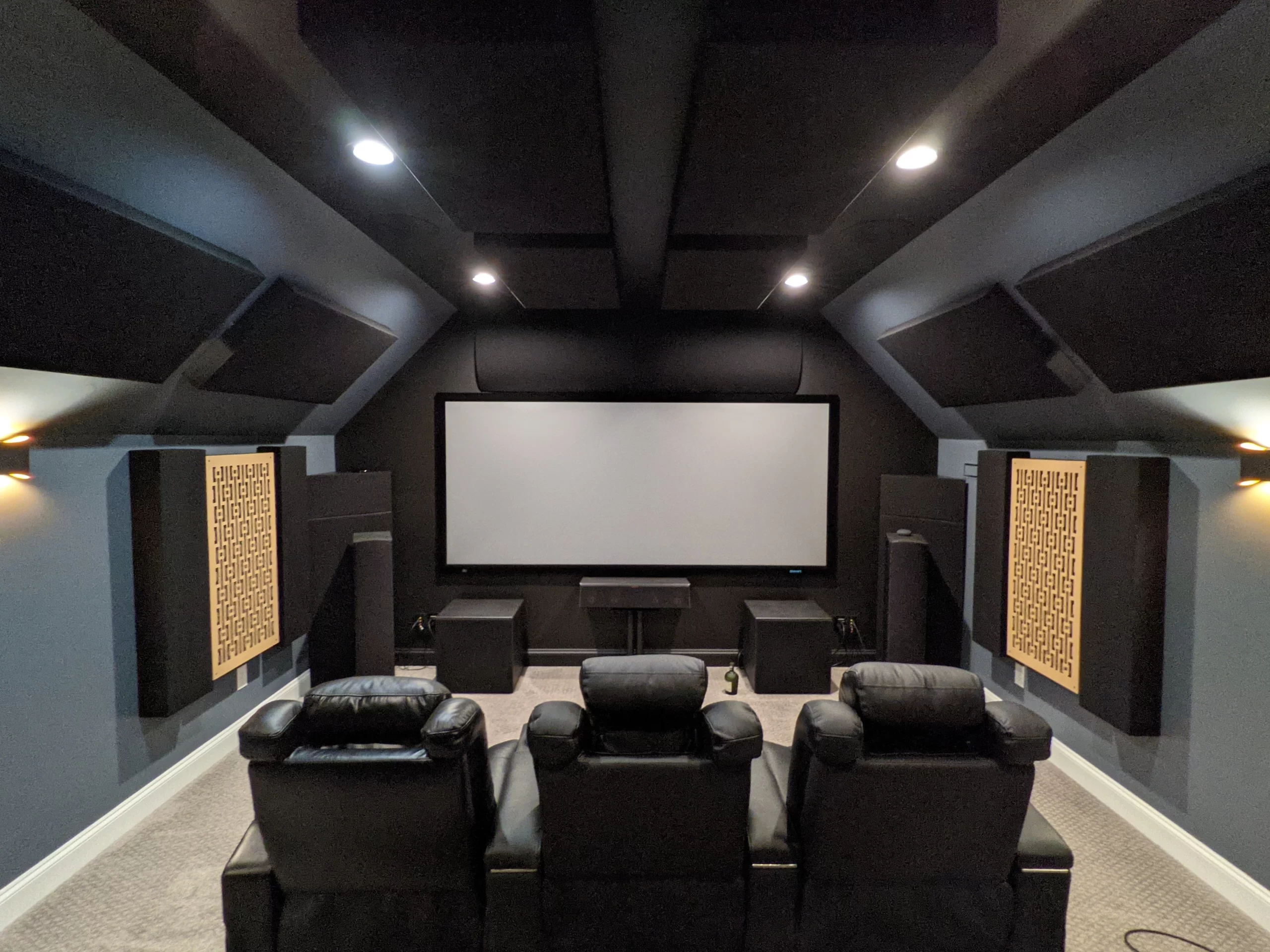
 by admin
Acoustic Panels and Soundproofing Tips for Private Home Cinemas
August 21, 2026Do you want to experience authentic, cinema-quality sound at your home theater installation, without disrupting the rest of your family or being a victim of loud echos? The simple act of purchasing powerful amplifiers and speakers is just the beginning when it comes to creating a media room. Without the proper acoustic treatment the sound waves can bounce off surfaces, floors made of concrete or glass window frames, which can cause unnatural dialogue, treble that is harsh, and loud bass. Additionally, rooms that are not insulated allow sound to penetrate the living and bedroom areas around them. The right placement of acoustic panels combined with efficient soundproofing techniques can transform an ordinary space into a cinema with acoustically balanced sound. In this article, we’re going to examine the main distinction between soundproofing and acoustic treatment. We will look at the key methods for panel placement, discuss strategies for sound isolation, and explore how smart home automation can enhance your home theater experience while providing tips on maintaining your theater’s soundproofing for maximum performance.
Understanding Soundproofing vs. Acoustic Treatment
Prior to purchasing any equipment it is important to know the difference between acoustic treatment and soundproofing since they serve two distinct needs in a cinema at home.
Soundproofing is focused on the isolation of sound, which is stopping the sound from entering or exiting the space. It is the process of the addition of heavy, dense materials to the walls, floors and ceilings in order to block the transmission of sound.
Acoustic treatment concentrates on diffusion and absorption of sound which improves the quality of the sound inside the room. It makes use of specially-designed bass traps and panels to control sound reflections and flutter echoes and provide crisp, clear and clear audio for your seating location.
Core Distinctions
- Soundproofing Goal Blocks sound leaks to ensure that film noise is kept inside while the sounds of your home stay out.
- Acoustic treatment goal: controls internal echos and reverberation to enhance clarity of speakers and the quality of soundstages.
- Acoustic Materials for Soundproofing: high-density drywall Mass Loaded Vinyl (MLV) as well as sound channels with abrasion resistance and solid-core acoustic doors.
- Acoustic Treatment Materials Acoustic Treatment Materials include: Fabric-wrapped fiberglass panel, Acoustic foam corner bass traps as well as sound diffusers.
Strategic Acoustic Panel Placement for Crystal-Clear Audio
Acoustic panels placed randomly in rooms will result in poor results. Acoustic design that is effective targets specific reflection points in which the sound waves reflect off surfaces before reaching your ears.
Taming First Reflection Points
The first reflection areas are the main wall spaces where the sound coming from the front center, left or right sound system bounces off directly towards your seating space.
To find the reflection points, sit down in your seat in the theater and have someone slide a mirror along the wall at eye level. Wherever you can see a speaker’s reflection in the mirror, mark that location on the wall. Installing 2 to 4-inch fabric-wrapped fiberglass acoustic panels at these points helps reduce hard side reflections, improves speech clarity and spatial imagery, and supports a well-connected home networking setup for a seamless home theater experience.
Controlling Low-Frequency Bass Buildup
Bass frequencies produce high-frequency sound waves, which are naturally gathered around room corners, creating an unbalanced, booming sound that drowns out subtle sound details.
Installing the bass traps that are thick and triangular in the corners that are vertical of your room can absorb excessive low-frequency energy. A proper bass absorption will ensure that your music is full of explosions and basslines feel clear, powerful and precise instead of muffled.
Balancing Rear-Wall Diffusion and Absorption
The wall behind your cinema is benefited by an absorption system and diffusion. Placing thick absorption panels behind your head will prevent back sound reflections from bouncing right back towards your ears. By adding 3D acoustic diffusers on the rear wall’s upper edge spreads sound energy across the space, creating a large 3D surround sound space.
Effective Soundproofing Isolation Techniques
If you want to watch action films in high volume late at night without disturbing your family members, installing the necessary structural soundproofing measures is vital.
Adding Mass and Decoupling Walls
Sound can easily travel through rigid, interconnected building structures like wooden studs or ceiling joists.
Decoupling is the process of mechanically separating wallboard from framing studs by using strong sound isolation clips and furring channels made of steel. By adding a second layer thick 5/8-inch drywall that is coated with a dampening substance such as Green Glue, sandwiched between the layers transforms sound energy into heat that is harmless and blocks low-frequency bass leaks.
Sealing Air Leaks and Gaps
Sound behaves like water. It leaks through any gap, crack or gap within your room’s boundary.
Replace hollow doors made of lightweight materials with heavy solid-core wooden doors with rubber seals around the perimeter and automatic drop-down bottoms for doors. Secure electrical outlets and recessed light fixtures and HVAC vents with Acoustic caulk that is not hardened to create a sound-proof, airtight barrier.
Floor and Ceiling Acoustic Enhancements
Walls aren’t just one of the surfaces which reflect the sound energy. Ceilings and floors also require focus when designing the perfect home theater.
The hard tiled hardwood and laminate flooring reflect high frequency sounds which can create harshness during film scenes. Installing a dense wall-to-wall carpet supported by a thick, sturdy underlayment rubber mat absorbs reflections off the floor and helps reduce footstep sound.
For ceilings that have acoustic ceiling tiles, or hanging specially-designed fabric acoustic clouds just above seating areas can prevent horizontal sound reflections that occur between the ceiling and floor.
Care and Acoustic Maintenance Guidelines
The maintenance of your acoustic treatment will preserve both the aesthetic appeal and the functionality of the home theatre as time passes.
The buildup of dust on Acoustic panels may ruin their appearance and lower absorption effectiveness. Clean the surfaces of your panels every couple of months with the soft brush attachment. Avoid applying water or liquid chemical cleaners directly to acoustic fabric, because moisture could cause fabric sagging and cause staining to the mineral wool material inside.
Regularly check door seals and acoustical joint caulk joints to make sure that no air gaps have formed as time passes. Cleaning your room’s air filter free of dust helps prevent buildup on walls and fabrics. It also ensures that your theater stays a clean and clean environment to watch movies.
Conclusion
A truly enjoyable movie experience in your home requires a thoughtful approach to soundproofing as well as the placement of acoustic panels. By decoupling walls and sealing air gaps, you can prevent film soundtracks from affecting the rest of your home. Placing acoustic panels at reflection points and installing bass traps in corners can reduce harsh echoes, improve dialogue clarity, and deliver powerful bass. With the right room acoustics and voice of controlled home technology, your home theater can deliver real, immersive, cinema-quality sound for every movie you watch.